
Defending Against RID Hijacking: A Critical Vulnerability Exploited by Andariel APT
Cyber threats continue to evolve, becoming more sophisticated and harder to detect. One of the most insidious techniques used by the notorious Andariel APT (Advanced Persistent Threat) group is RID Hijacking.
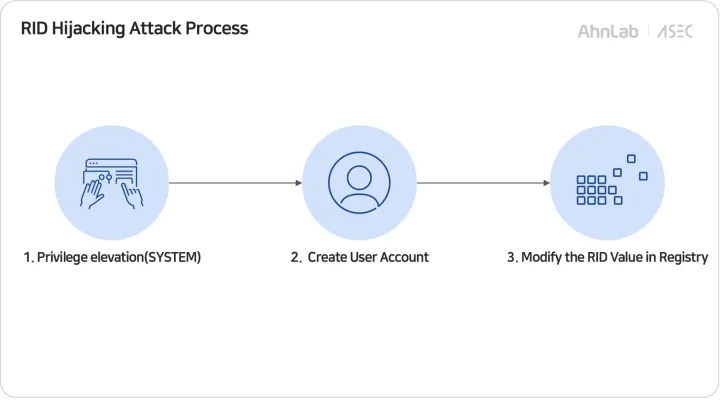
Cyber threats continue to evolve, becoming more sophisticated and harder to detect. One of the most insidious techniques used by the notorious Andariel APT (Advanced Persistent Threat) group is RID Hijacking. This attack method allows threat actors to bypass security mechanisms by exploiting Relative Identifier (RID) values in the Windows operating system, enabling them to elevate their privileges and gain unauthorized access to critical resources. By understanding and defending against RID Hijacking, organizations can better protect their infrastructure from these targeted and stealthy attacks.
In this post, we’ll examine how RID Hijacking is used by Andariel APT, break down its attack vector through infrastructure mapping, and provide actionable Indicators of Compromise (IOCs) to block in order to enhance your cybersecurity defenses.
What is RID Hijacking?
RID Hijacking is a method used to manipulate a system’s RID values, which are typically assigned to identify security principals like users and groups in Windows. Attackers leveraging this technique can effectively impersonate privileged users, such as Administrators, without raising suspicion. In the case of Andariel APT, this technique is used to escalate privileges and maintain a stealthy foothold in compromised networks.
Once the attackers exploit RID Hijacking, they can:
Gain higher privileges within the system, bypassing traditional access control mechanisms.
Execute malicious actions such as data exfiltration or lateral movement across networks.
Maintain persistence by acquiring administrative control, often without detection.
By using this technique, Andariel APT is able to gain long term access to the target network, performing reconnaissance, stealing data, and deploying additional payloads as needed. It’s a dangerous and effective method for maintaining a low profile presence while escalating control.
Mapping the RID Hijacking Attack Infrastructure
To better understand the infrastructure behind RID Hijacking attacks, we can break down the key stages involved in an attack launched by Andariel APT:
1. Initial Exploitation:
The attackers typically begin by exploiting known vulnerabilities within an organization’s network. They may use phishing, malware, or a vulnerability in a public facing application to gain initial access.
2. Privilege Escalation via RID Hijacking:
Once inside the network, the attackers seek to elevate their privileges by exploiting RID values, granting them Administrator level access. This allows them to bypass traditional defenses, such as the Least Privilege Principle, which is meant to restrict user actions to only what is necessary.
3. Establishing Persistence:
After gaining higher privileges, the attackers deploy persistence mechanisms that allow them to remain undetected for extended periods. This may involve installing backdoors, exfiltrating data, or creating new accounts with elevated privileges.
4. Lateral Movement:
With administrator level privileges, Andariel APT can move laterally through the network, compromising other systems and expanding their access to sensitive information.
5. Data Exfiltration and Network Control:
The final phase of an attack often involves data exfiltration or using the compromised network for further attacks. Attackers may also plant additional malware or tools for future use.
Through mapping these stages and understanding the infrastructure involved, organizations can proactively implement detection and mitigation strategies, ensuring their systems are secure from this form of exploitation.
Indicators of Compromise (IOCs) to Block
To defend against RID Hijacking and its related activities, it’s essential to block the IOCs associated with Andariel APT. Below is a table of critical IOCs linked to GoLandBuildPE, a tool commonly used by Andariel for creating malicious payloads.
| Type | Indicator |
|---|---|
| FileHash-MD5 | b500a8ffd4907a1dfda985683f1de1df |
| FileHash-SHA1 | 0ba35b0795f3ad125d4ba253c8593762028dba09 |
| FileHash-SHA256 | 303243e4a8bf71cbb208d608277ab25241ecbd1a0b8930a68c27ab03b0d4d8ae |
Blocking these IOCs is a key step in reducing the risk of an Andariel APT attack in your environment. By implementing network and endpoint monitoring strategies, organizations can detect suspicious behavior linked to these indicators, preventing the attack before it gains traction.
Proactive Steps to Enhance Security
Beyond blocking IOCs, here are a few proactive measures you can take to strengthen your defenses against RID Hijacking and other advanced threats:
1. Apply the Principle of Least Privilege: Ensure that users and systems only have the minimum privileges necessary to perform their tasks. This limits the ability of attackers to escalate privileges through RID Hijacking.
2. Regularly Update and Patch Systems: Keep your systems up to date by applying security patches and updates. RID Hijacking often exploits unpatched vulnerabilities, so staying current is essential.
3. Monitor for Abnormal Account Activity: Implement behavior analytics tools that can detect unusual activities, such as changes to RID values or accounts with elevated privileges being used in abnormal ways.
4. Strengthen Authentication and Access Controls: Use multifactor authentication (MFA) and secure administrative access to further mitigate the risks of privilege escalation.
5. Implement Endpoint Detection and Response (EDR): Use advanced EDR tools to detect and block malicious activities that may be linked to RID Hijacking and privilege escalation attempts.
Protecting Your Organization from Andariel APT
RID Hijacking is a dangerous technique used by sophisticated threat actors like Andariel APT to bypass security mechanisms and elevate their privileges within a compromised network. Understanding the mechanics of this attack and implementing a strong cybersecurity infrastructure is essential for defending against these types of threats.
By regularly monitoring your systems, blocking IOCs, and adopting proactive security measures, you can significantly reduce the risk of a successful attack. Our expert team is here to help you map your infrastructure, detect vulnerabilities, and implement effective defenses. Contact us today to learn how we can help you protect your network from the evolving threat landscape.
This blog post not only raises awareness of RID Hijacking but also offers tangible steps and IOCs for companies to defend against these attacks, positioning your cybersecurity services as a vital resource for companies looking to secure their networks.