
Exposing the LinkPro Rootkit Infrastructure Breakdown & Key Defenses
The LinkPro Rootkit is a highly sophisticated malware that continues to make waves in the cybersecurity landscape.

Unmasking the LinkPro Rootkit Infection Campaign A Deep Dive into Its Infrastructure
The LinkPro Rootkit is a highly sophisticated malware that continues to make waves in the cybersecurity landscape. This blog post delves into an in-depth analysis of this malware using Linux analysis tools, providing key insights into its infrastructure, behavior, and indicators of compromise (IOCs). Understanding how LinkPro operates is crucial for organizations seeking to strengthen their defenses against this growing threat.
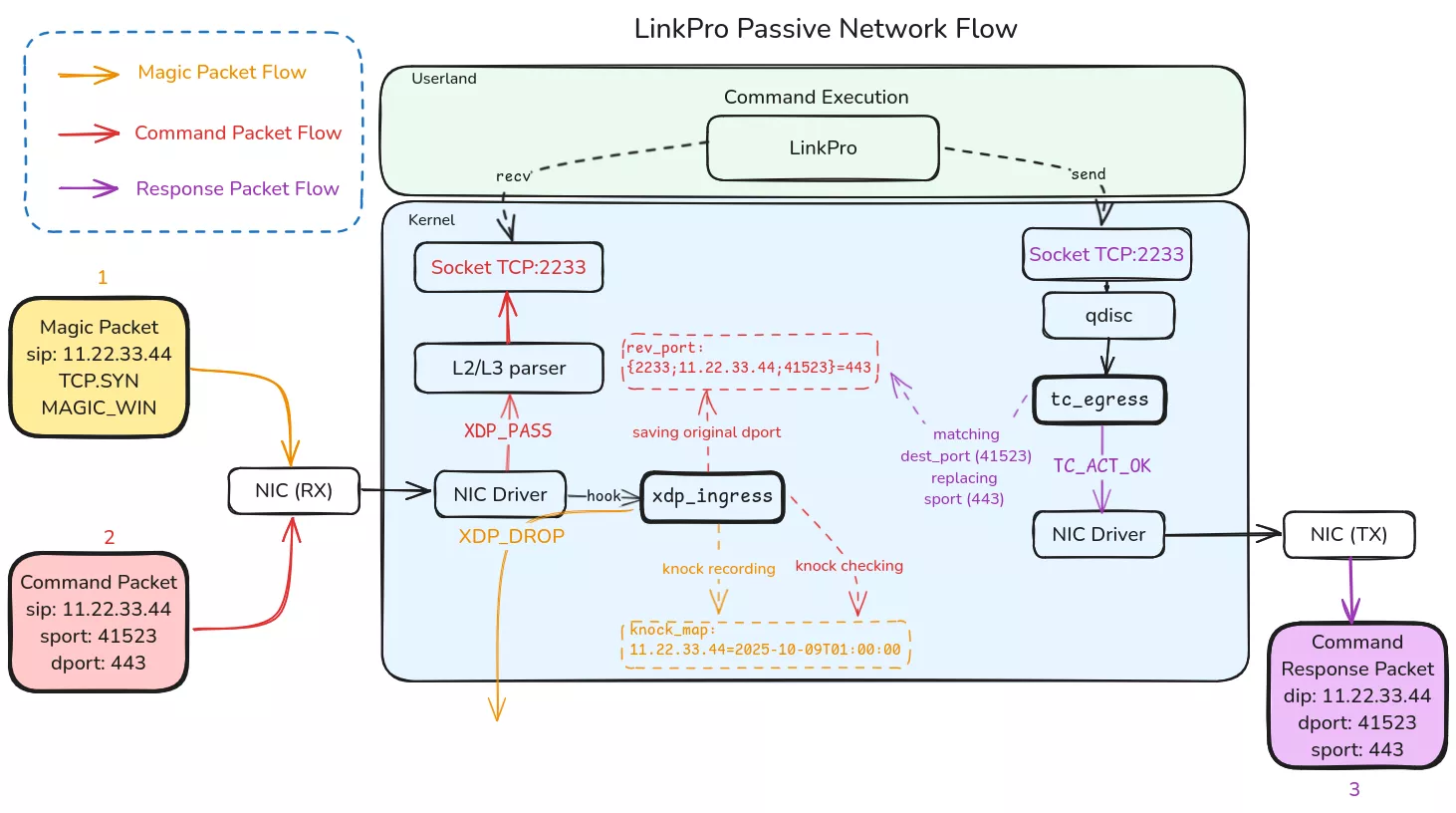
The Anatomy of the LinkPro Rootkit
Upon investigating the LinkPro Rootkit, we identified its malicious executable file and examined it using various Linux analysis tools. The findings revealed alarming details that organizations should be aware of:
Malware Name: LinkPro Rootkit
Upon investigating the LinkPro Rootkit, we identified its malicious executable file and examined it using various Linux analysis tools. The findings revealed alarming details that organizations should be aware of:
Malware Name: LinkPro Rootkit
File Name: 1368f3a8a8254feea14af7dc928af6847cab8fcceec4f21e0166843a75e81964.elf
Malware Hash: 1368f3a8a8254feea14af7dc928af6847cab8fcceec4f21e0166843a75e81964.elf
VirusTotal Score: 34 Malicious Detections
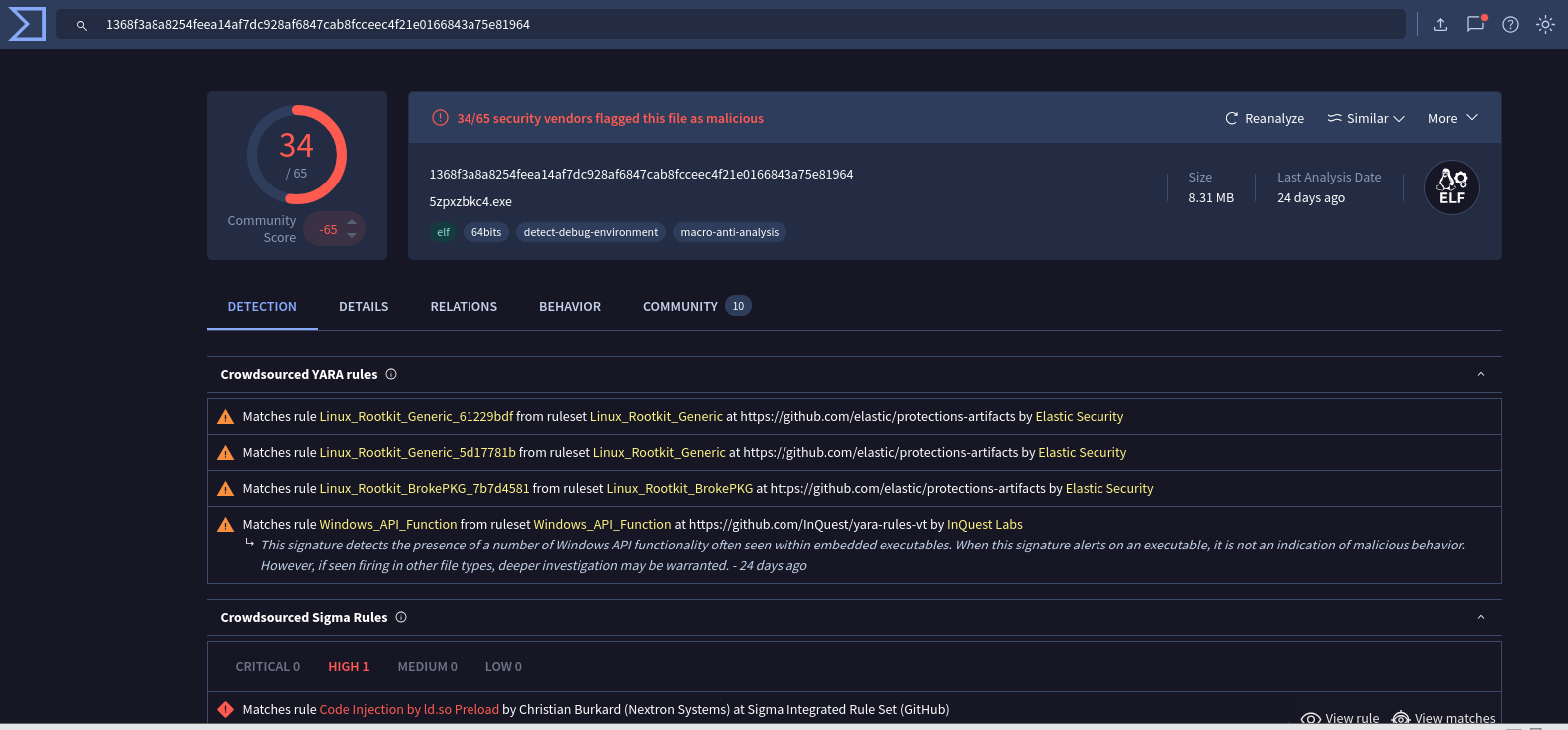
File Examination:
File Type: ELF 64-bit LSB executable
Architecture: x86-64
Build: Go BuildID=10KirX_JMYOi0to7IpNv/_HVOdESaAhL_3f7wLHh9/Zwgf4mKGkNqbFwwnC4R7/qEnQf9VLhT3KdwC5xLAB
Stripped: Yes (No debugging symbols included)

The file’s structure suggests that it is a statically linked ELF executable, commonly used for stealth and resilience in the event of system recompilation.
File Analysis Findings
We carried out several examinations to understand the rootkit’s operations more deeply. Here’s what we found:
1. ELF Header
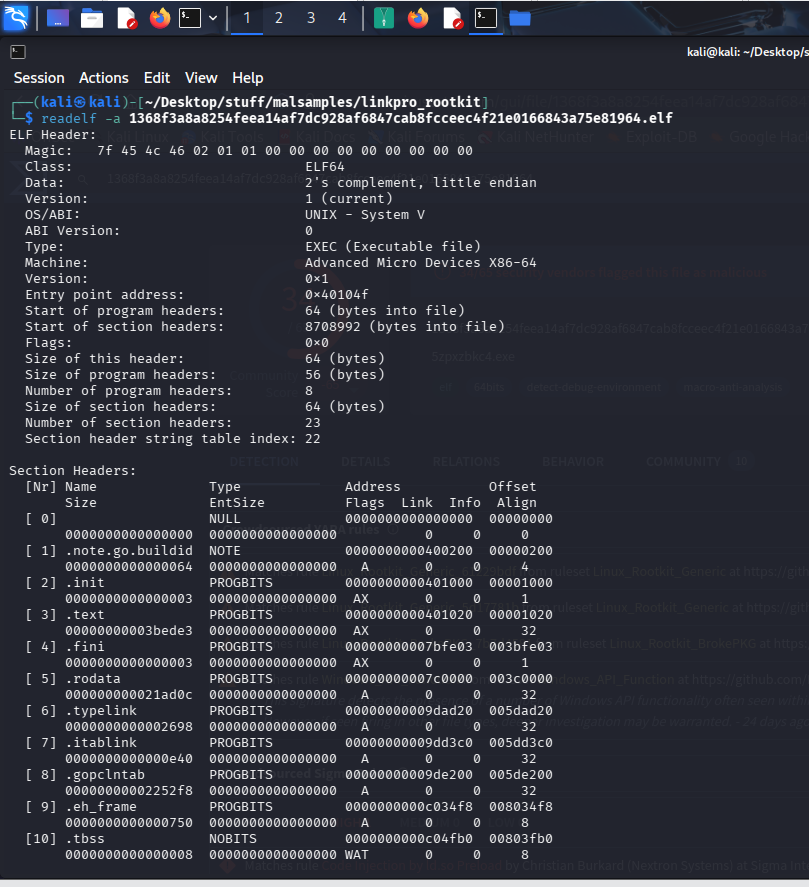
Using the readelf command, we explored the ELF header, which is crucial in identifying potential rootkits:’
sudo readelf -a 1368f3a8a8254feea14af7dc928af6847cab8fcceec4f21e0166843a75e81964.elf
The header reveals:
Magic Number: Identifies the file as an ELF (Executable and Linkable Format) file, which is native to Unix-like systems.
Entry Point Address: 0x40104f, likely the starting point of the malware’s execution.
Program Header Info: Contains details on memory layout and loading.
This information is vital when crafting defenses against the rootkit.
2. Symbol Table:
When running nm on the file, no symbols were found, indicating that the malware is stripped. This is a common tactic used by malware to make reverse engineering more difficult.
nm: 1368f3a8a8254feea14af7dc928af6847cab8fcceec4f21e0166843a75e81964.elf: no symbols
This stripped binary is harder to analyze, but with the right tools and techniques, it still reveals key insights.

3. String Examination:
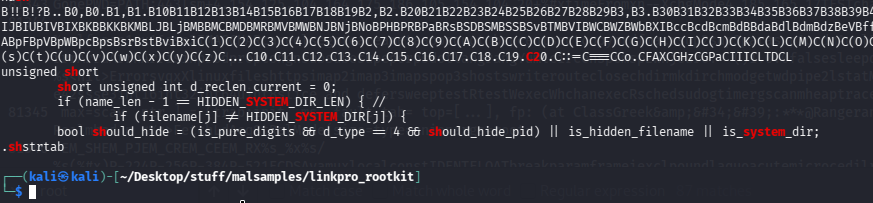
The strings command on the file revealed some crucial data strings that could be associated with the rootkit’s operation:dep github.com/RedTeamPentesting/kbtls v0.1.1 h1:p9x2OH7fBGgBZnACJ6sVo8MsNczFgITfTbpVexzSS2Y=
The presence of strings related to GitHub repositories and TLS libraries suggests that the rootkit may have components that interact with external systems or use encrypted communication channels to evade detection.

Malicious Behavior Analysis
While conducting dynamic analysis, the following malicious activity was detected:
The ELF file attempts to interact with the IP address 18.199.101.111, which is flagged as suspicious. This suggests a Command and Control (C2) communication channel, where the malware sends or receives instructions, potentially enabling further exploitation or lateral movement.
Upon investigation, VirusTotal flagged this IP address as malicious across seven different AV engines, confirming its role in a broader cybercrime operation.
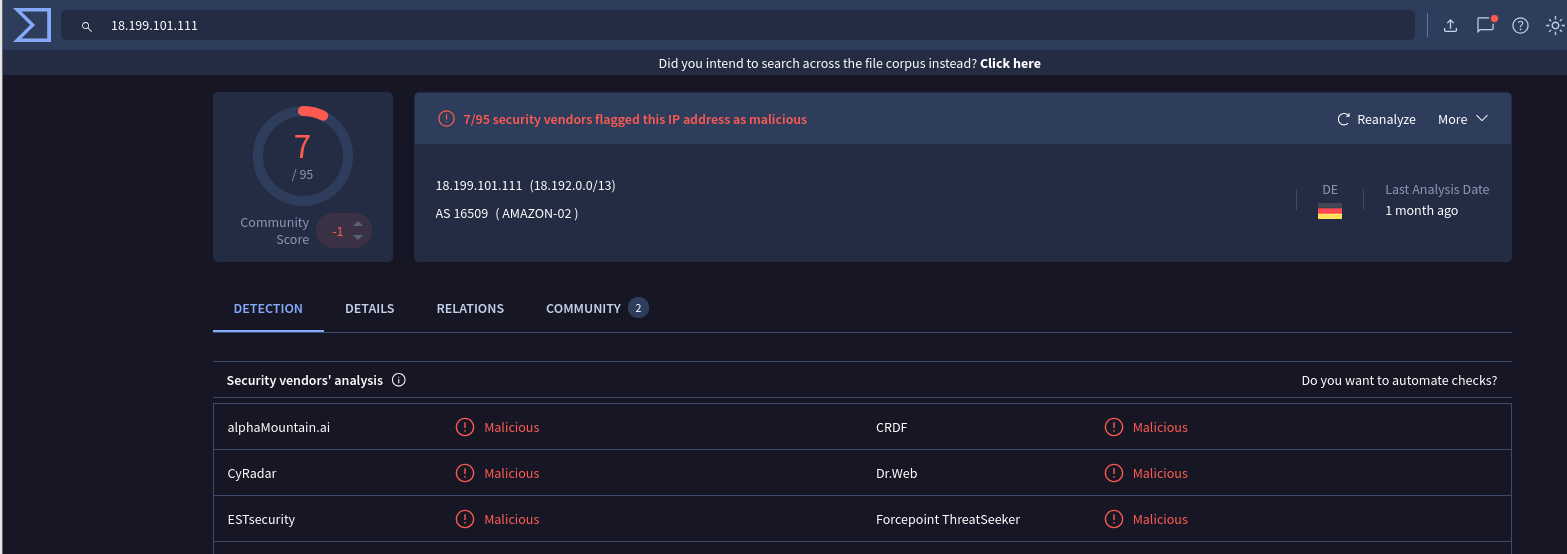
File Interaction Example:
trace /path/to/malware/1368f3a8a8254feea14af7dc928af6847cab8fcceec4f21e0166843a75e81964.elf

During runtime, the malware attempted connections to 18.199.101.111, further solidifying the suspicion that this address is part of the rootkit’s infrastructure.
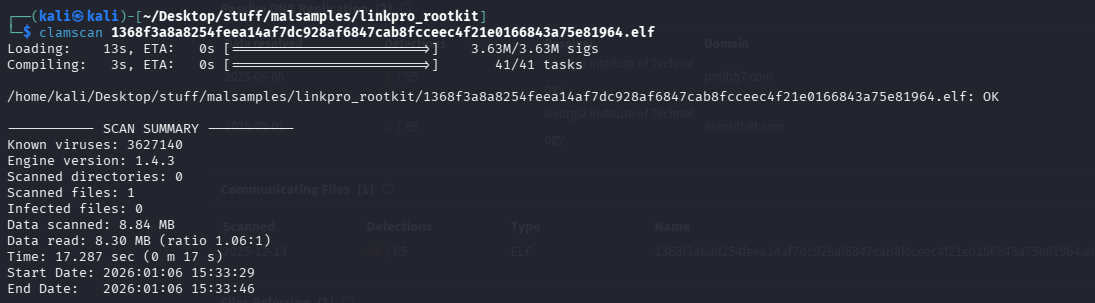
Interestingly, when the hash (1368f3a8a8254feea14af7dc928af6847cab8fcceec4f21e0166843a75e81964) was scanned with ClamAV, it did not initially show any malicious behavior, pointing to potential gaps in signature-based detection. However, this underscores the importance of behavior-based analysis, which can spot anomalies that traditional AV tools might miss.
Indicators of Compromise (IOCs)
Below are some critical IOCs identified during our investigation that can be used to enhance network security and prevent the propagation of LinkPro Rootkit infections:
| IOC Type | Value |
|---|---|
| Malicious IP Address | 18.199.101.111 |
| Malware Hash (SHA256) | 1368f3a8a8254feea14af7dc928af6847cab8fcceec4f21e0166843a75e81964 |
| File Hash (MD5) | d5b2202b7308b25bda8e106552dafb8b6e739ca62287ee33ec77abe4016e698b |
| Malicious Domain | github.com/RedTeamPentesting/kbtls |
Building a Stronger Defense
This investigation of the LinkPro Rootkit highlights the importance of infrastructure mapping when defending against advanced persistent threats (APTs). By mapping out the C2 infrastructure, malicious IOCs, and attack vectors, organizations can take proactive measures to prevent infections and mitigate the impact of such rootkits.
Incorporating tools like Linux-based analysis tools, real-time monitoring systems, and threat intelligence feeds into your cybersecurity strategy can significantly enhance detection capabilities, making it easier to identify and neutralize malicious actors like those behind the LinkPro Rootkit.
Conclusion
The LinkPro Rootkit represents a growing threat that underscores the need for robust cybersecurity practices. By combining static and dynamic analysis methods, organizations can build better detection mechanisms and responses to emerging threats. Incorporating real-time threat intelligence and mapping the infrastructure of these attacks is essential to staying ahead of cybercriminals.
By blocking the identified IOCs, monitoring suspicious traffic, and using advanced detection techniques, you can fortify your defenses against this and other rootkit campaigns.
Stay vigilant. The LinkPro Rootkit is just one example of how sophisticated threats are evolving it’s time to strengthen your defenses.