Ghost in Action: Unmasking the Specter Botnet Infrastructure
As threat actors evolve, so do their methods of staying hidden. Modern botnets no longer rely solely on brute force or noisy traffic they’re stealthy, modular, and highly resilient.
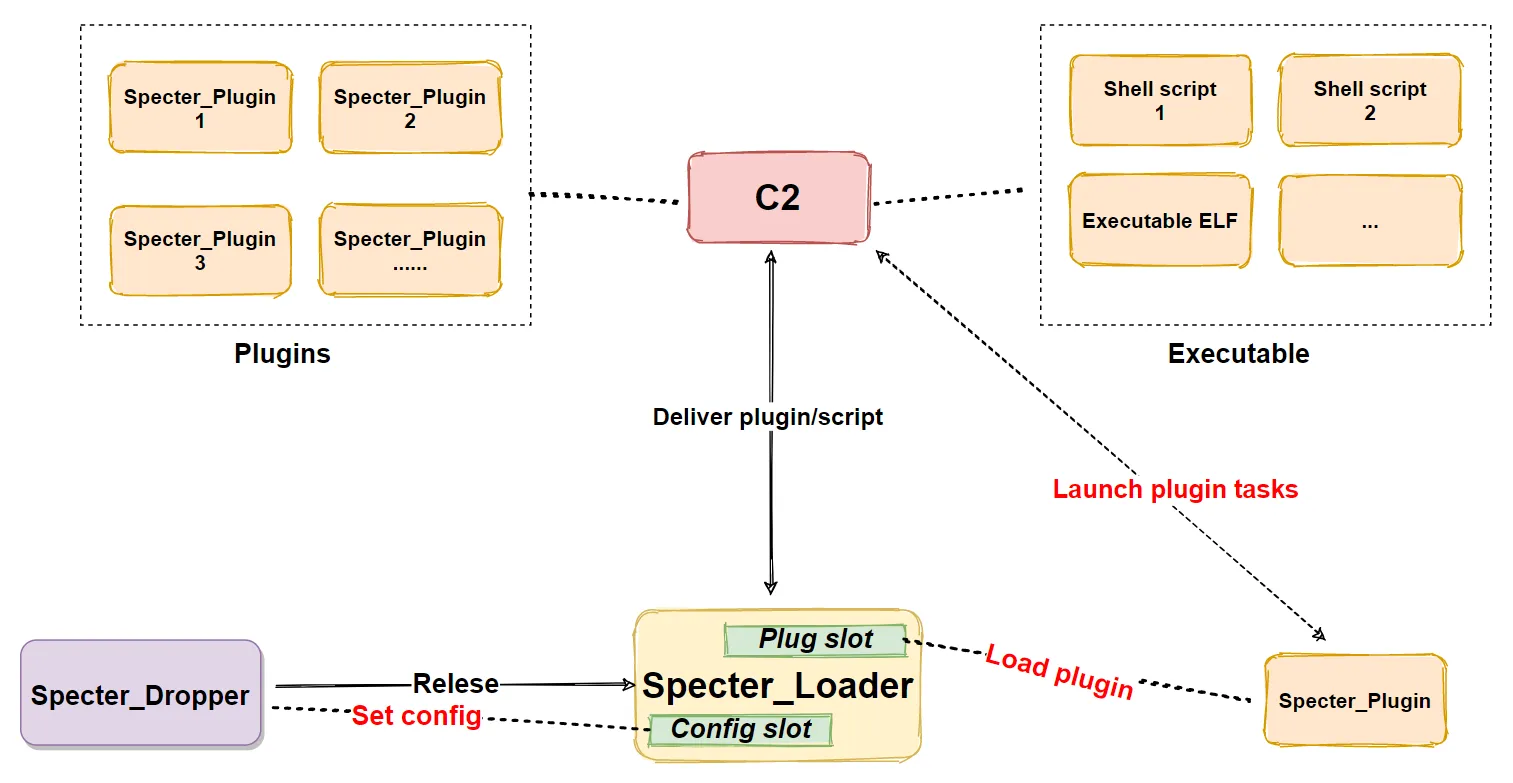
As threat actors evolve, so do their methods of staying hidden. Modern botnets no longer rely solely on brute force or noisy traffic they’re stealthy, modular, and highly resilient. Today, we turn the spotlight on Specter, a new botnet framework that has been quietly growing under the radar, using advanced infrastructure obfuscation to maintain persistence and control.
Through careful infrastructure mapping and malware analysis, we’ve deconstructed Specter’s hidden architecture exposing critical indicators and behaviors that organizations can act on now.
What is Specter?
Specter is a multi-stage botnet designed with a strong emphasis on stealth, resiliency, and adaptability. What sets it apart from traditional botnets is its ability to blend malicious traffic into legitimate flows by mimicking standard services (e.g., HTTPS on port 443), distributing lightweight droppers, and avoiding centralized infrastructure.
Key capabilities observed:
Encrypted command-and-control (C2) over TLS.
Hardcoded IPs and failover logic in samples to avoid sinkholing.
Fileless execution via PowerShell and WMI.
Modular loaders capable of downloading updated payloads and reconfigurations on demand.
Abuse of SPNs and domain credentials to pivot laterally (when deployed in Active Directory environments).
Reconstructing the Botnet’s Infrastructure
Using infrastructure mapping techniques, we traced multiple infected hosts communicating with a shared C2 node hosted in California, operating over a standard HTTPS port (443), making its detection more difficult without deep inspection. Analysis of passive DNS records, reverse infrastructure lookups, and AS-level tracing revealed that this IP is tied to ASN25820 (IT7 Networks Inc), a known abuse-friendly hosting provider.
Botnet structure highlights:
C2 Hub: 107.182.186.195:443
Downloader Endpoint: http://45.76.70.163/style/… serving disguised payloads (masquerading as CSS files).
Payload Delivery: Base64-encoded PowerShell scripts fetched and executed directly in memory.
Communication Protocol: HTTPS-based C2 heartbeat with minimal headers to reduce detection.
This decentralized design allows Specter to survive takedowns of individual nodes and complicates blacklisting efforts.
Malware Analysis Breakdown
The malware samples associated with Specter are small (under 100KB) and primarily function as droppers or loaders. These components are engineered to evade static detection:
Technical Observations:
No file drops to disk – executed directly in memory via Invoke-Expression or rundll32.
Persistence via WMI Event Subscriptions or ScheduledTasks, depending on permissions.
Payloads pulled from remote sources with randomized URLs disguised as style sheets or images.
Obfuscation techniques include base64-encoded commands, variable name randomization, and string splitting to bypass signature-based defenses.
Indicators of Compromise (IOCs)
Implement the following blocks and detection rules in your SIEM, EDR, or XDR platforms to minimize exposure.
| IP Address | Port | ASN | Organization | Location |
|---|---|---|---|---|
| 107.182.186.195 | 443 | ASN25820 | IT7 Networks Inc | United States, California, Los Angeles |
| MD5 Hash |
|---|
| 04c7ef9e4197985d31e5d601a9161c5e |
| 052b6fce24a800259289e2f06163db57 |
| 065d942effb6010bb48f7403d3ad442b |
| 0d0bf23412bd34c82ab28e67278519bf |
| 2b89fd69d128c8a28425c512670e531a |
| 2ed27722e095b1c870fdb10e4990db0f |
| 42d341d0b76869abc2231c70d0f0ecc9 |
| 5e03c99153ed59546bf60c9f896a30f1 |
| 7377eedb6512743858d52da3cc028a33 |
| 7c59ddc06da158afc8b514a9a81ffd36 |
| a5ded8b31b17c88302882cccc35cc28f |
The file hosted here mimics a CSS resource but delivers a PowerShell dropper upon execution. Organizations should inspect and filter outbound requests to this domain and IP.
Recommendations for Defenders
To mitigate Specter and similar threats:
Block known C2 IPs and URLs at the firewall, proxy, and DNS levels.
Hunt for indicators using EDR/XDR tools, especially around PowerShell, WMI, and network traffic to uncommon destinations.
Segment your network to isolate critical systems and reduce lateral movement opportunities.
Enable PowerShell logging (Module & ScriptBlock) and forward logs to your SIEM for correlation.
Monitor for unusual persistence mechanisms, such as WMI Event Consumers or hidden scheduled tasks.
Visibility Is Your Best Defense
Specter reminds us that the most dangerous threats are often the ones we don’t see, until it’s too late. At Alpha Cyber, we specialize in transforming obscure attacker infrastructure into actionable intelligence, giving you a strategic edge in the fight against botnets, malware, and APTs.
Contact us today for a tailored threat visibility assessment and take control of your attack surface.