Indian Cyber Force & #OpCanada: Why Your Website is the New Diplomatic Battlefield.
When geopolitical tensions boil over, the first shots aren’t always fired on the battlefield they’re fired in the browser.
Digital Fallout: Why Global Politics Is Your Newest Cybersecurity Threat.
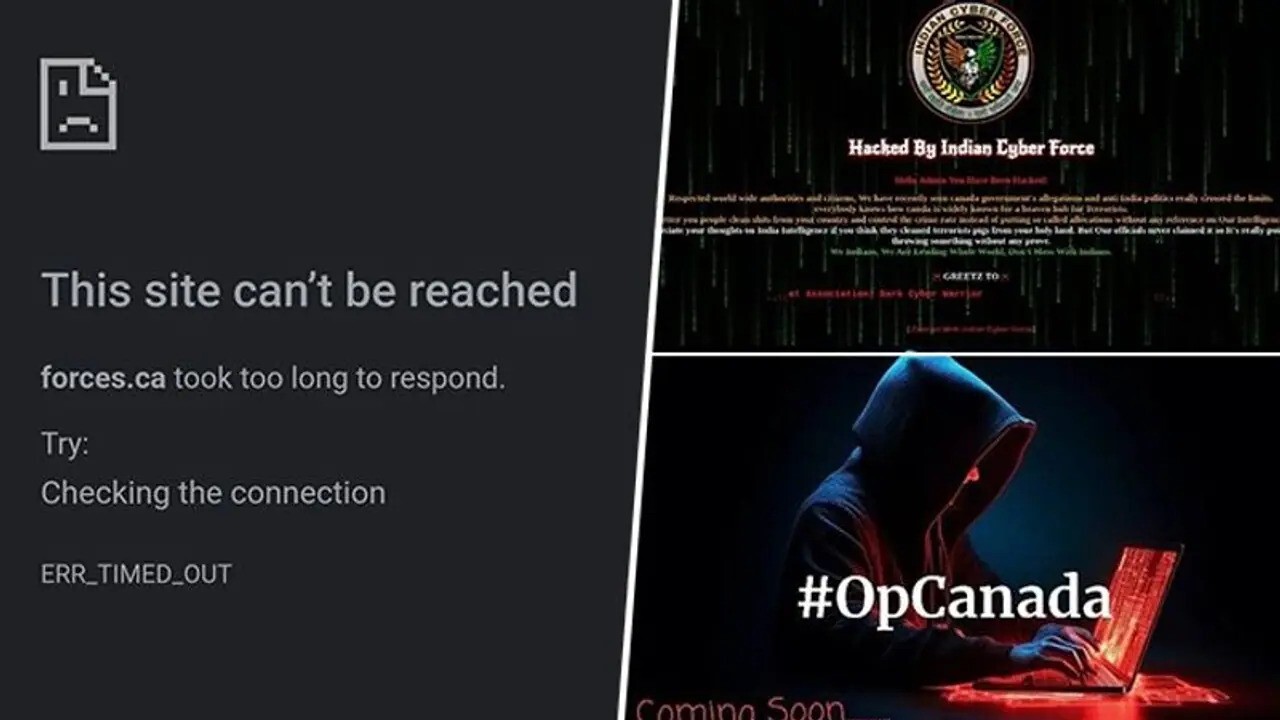
When geopolitical tensions boil over, the first shots aren’t always fired on the battlefield they’re fired in the browser. In late 2023, the “Indian Cyber Force” (ICF) took down the Canadian Armed Forces website as part of #OpCanada, a clear reminder that your digital presence is a hostage to global headlines.
If you think your business is “too small” or “not political enough” to be a target, you’re making a dangerous assumption.
Executive Summary
The recent DDoS attacks on Canadian military and government infrastructure by Indian hacktivists prove that cyber warfare is no longer reserved for state actors. These “nuisance” attacks can cripple operations, damage reputations, and act as a smokescreen for deeper intrusions. This post explores the reality of hacktivism and why a “passive” defense is no longer enough.
The New Normal: Hacktivism as a Service
The attack on the Canadian Armed Forces wasn’t a sophisticated data breach; it was a Distributed Denial of Service (DDoS) attack. The attackers didn’t “break in” they just stood in the doorway so no one else could get through.
While the military site was fixed in hours, the “Indian Cyber Force” didn’t stop there. They targeted hospitals, dental clinics, and small businesses across Canada. Why? Because these are “soft targets.” They are easy to hit and provide the “noise” hacktivists need to make headlines.
Why This Matters to Your Business
Guilt by Association: If your company provides services to a government, or even just operates in a country currently in a diplomatic spat, you are on the list.
The “Loud” Smokescreen: Often, a loud, public DDoS attack is just a distraction. While your IT team is scrambling to get the website back up, the real attackers are quietly slipping through the back door to steal data.
Reputational Fragility: If a customer can’t access your portal because of a political feud they don’t care about, they don’t blame the hackers they blame your “unreliable” tech
How We Protect Our Clients from the “Nuisance” Storm
You can’t control international relations, but you can control your perimeter. When we manage a client’s defense, we don’t just “monitor” we build a fortress that breathes.
Geofencing & Rate Limiting: We identify suspicious traffic spikes from specific regions and throttle them before they hit your server. If you don’t do business in a specific country, they shouldn’t be able to send you 10 million requests per second.
Always-On Scrubbing: We route your traffic through high-capacity “scrubbing centers” that can absorb massive volumetric attacks without your users ever seeing a “404 Error.”
Infrastructure Decoupling: We ensure your public-facing website isn’t sitting on the same server as your sensitive customer database. If the “front porch” gets crowded, the “vault” stays locked and hidden.
The Bottom Line
The Canada-India incident is a wake-up call. In 2026, “it won’t happen to me” is a failed strategy. Hacktivism is erratic, politically motivated, and completely indifferent to your bottom line.
In Brief: The Digital Shield
The takedown of the Canadian military website was a calculated act of digital vandalism. It highlights a growing trend where private and public sectors are targeted based on geography and politics. Staying online requires more than a standard firewall; it requires adaptive, real-time traffic management and a proactive stance against hacktivist groups.
Would you like us to perform a “DDoS Stress Test” on your current infrastructure to see how much pressure it can actually handle?