
MedusaLocker Ransomware: Unmasking the Threat through Infrastructure Mapping
In the evolving world of cyber threats, ransomware campaigns like MedusaLocker are becoming more sophisticated and difficult to combat.

Inside the MedusaLocker: A Ransomware’s Sneaky Infrastructure
In the evolving world of cyber threats, ransomware campaigns like MedusaLocker are becoming more sophisticated and difficult to combat. This post delves into the infrastructure and behavioral characteristics of the MedusaLocker ransomware campaign, offering insights into its operations, key indicators of compromise (IOCs), and how businesses can better defend against it. By understanding the tools and techniques it employs, companies can better prepare their defenses.
Overview
MedusaLocker is a sophisticated ransomware family that has gained notoriety for its effective encryption methods, as well as its ability to remain under the radar for extended periods. Upon infection, it targets files on the system and demands a ransom in exchange for decryption keys. The malware’s persistence and ability to bypass security defenses make it a significant threat to organizations worldwide.
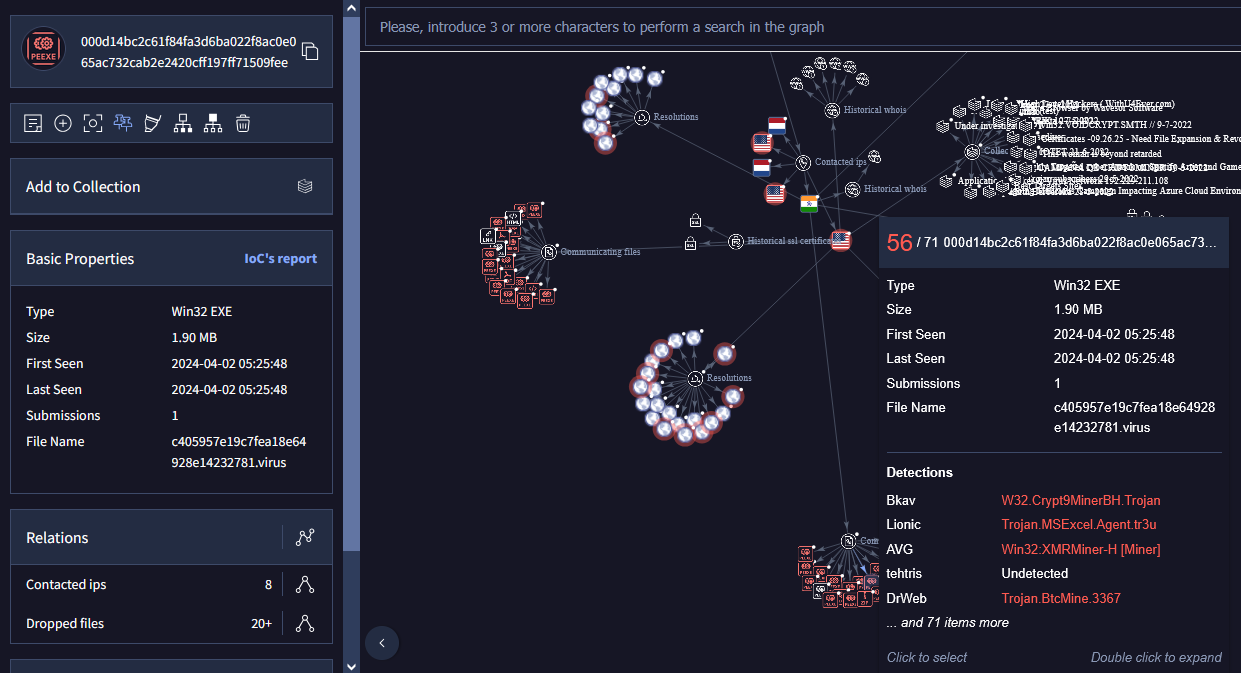
While mapping the infrastructure and grappling with IOCs using VirusTotal, it became apparent that MedusaLocker establishes a direct connection to an IP address located in India, suggesting a possible operational base or compromised network node tied to this region.
Key File Details:
Malware Name: MedusaLocker
File Name: Not specified
Malware Hash:
05b51b5f41e483020d14126522a13c69b75e5cbb093a78980877bb60cf778873VirusTotal Score: 61/100 (Malicious Detection)
IP Address: Not specified
IP Address Location: Not specified
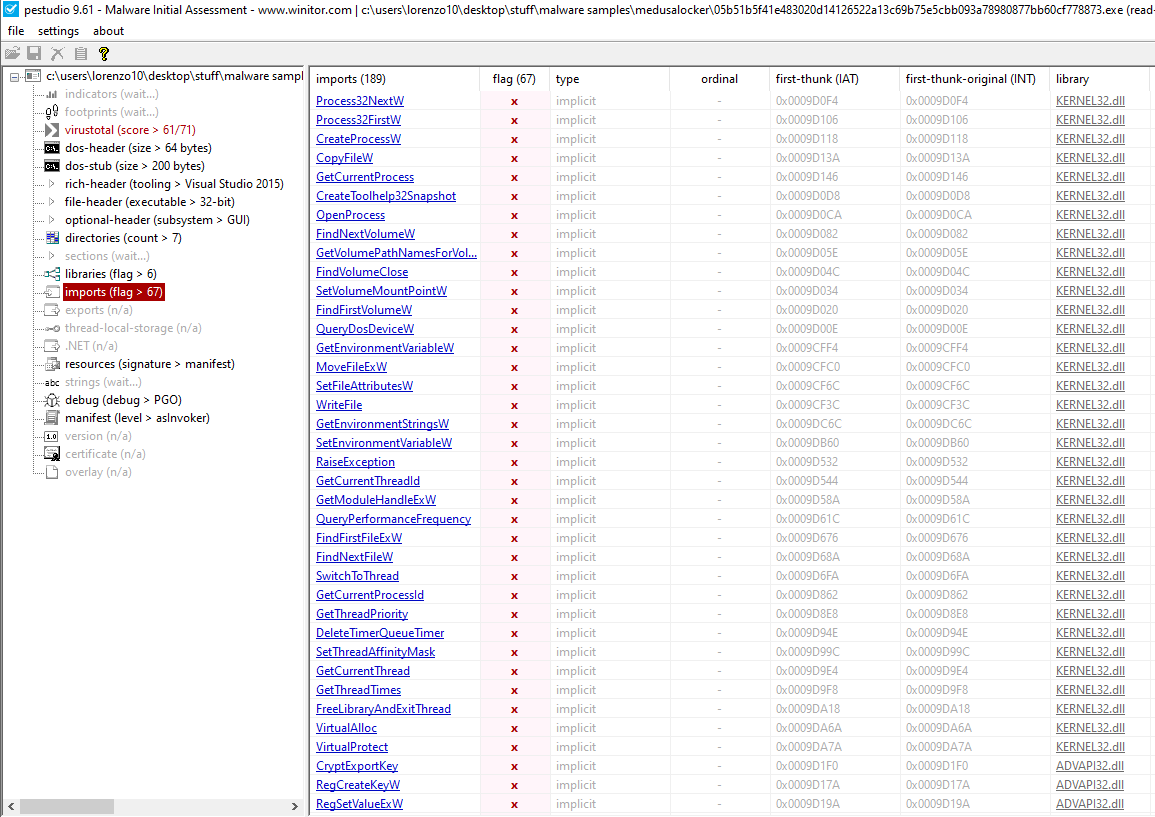
Total Malicious Imports: 67
Malicious Imports Example:
GetCurrentProcess,WriteFile,OpenProcess,GetTokenInformation
Behavioral Insights from PeStudio Analysis
Using tools like PeStudio, we can investigate the behavior of MedusaLocker ransomware and gain a clearer picture of how it functions. Upon examining the file associated with MedusaLocker, PeStudio reveals several key insights:
Static Analysis Findings:
File Format: PE (Portable Executable)
Operating System: Windows
Architecture: x86 (i386)
Indicators of Compromise (IOCs):
The malware shows multiple red flags for both malicious file operations and system manipulation attempts.
Imports and Functionality:
It imports functions like
WriteFileandOpenProcess, which are common indicators of processes designed to interact with or manipulate files and running processes.
Mandiant Capa Tool Analysis
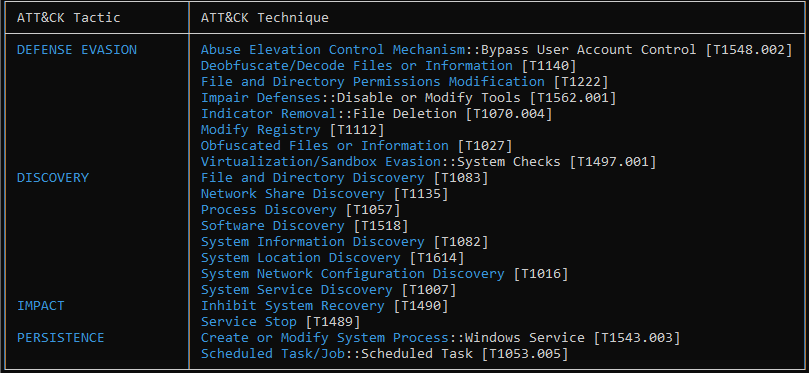
Mandiant’s Capa Tool uncovers further tactics and techniques used by MedusaLocker. Here is a snapshot of its activity:
| ATT&CK Tactic | ATT&CK Technique |
|---|---|
| Defense Evasion | Bypass User Account Control [T1548.002] |
| File and Directory Permissions Modification [T1222] | |
| Indicator Removal::File Deletion [T1070.004] | |
| Discovery | File and Directory Discovery [T1083] |
| Process Discovery [T1057] | |
| Impact | Inhibit System Recovery [T1490] |
| Persistence | Scheduled Task/Job::Scheduled Task [T1053.005] |
MedusaLocker exhibits several Defense Evasion techniques, including:
Abuse Elevation Control Mechanisms to bypass User Account Control (UAC).
File Deletion to remove traces of its presence.
System Checks to evade detection in virtualized environments.
Malware Behavior: Capabilities and Indicators
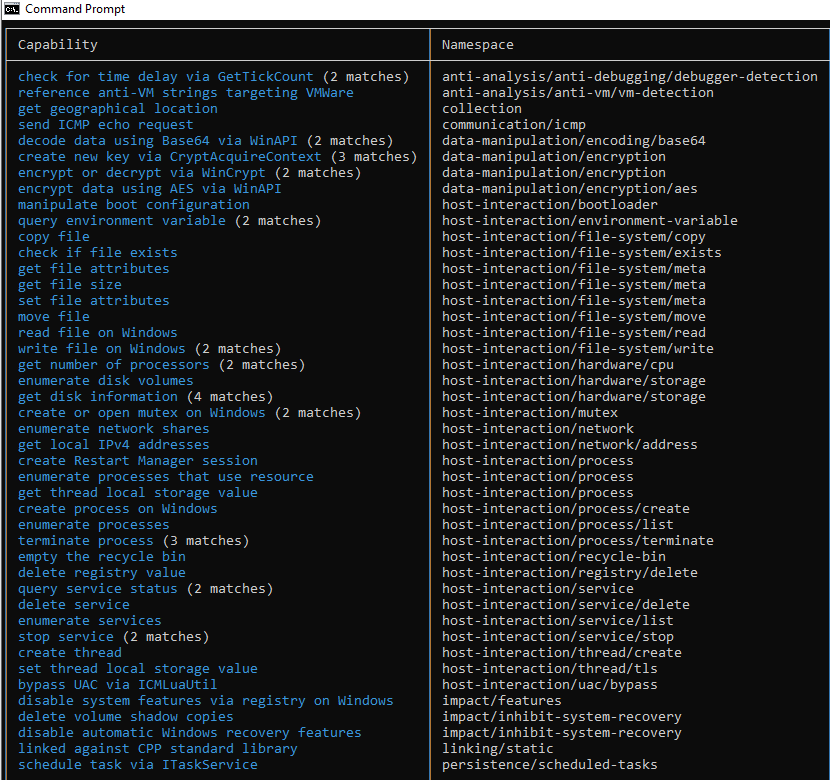
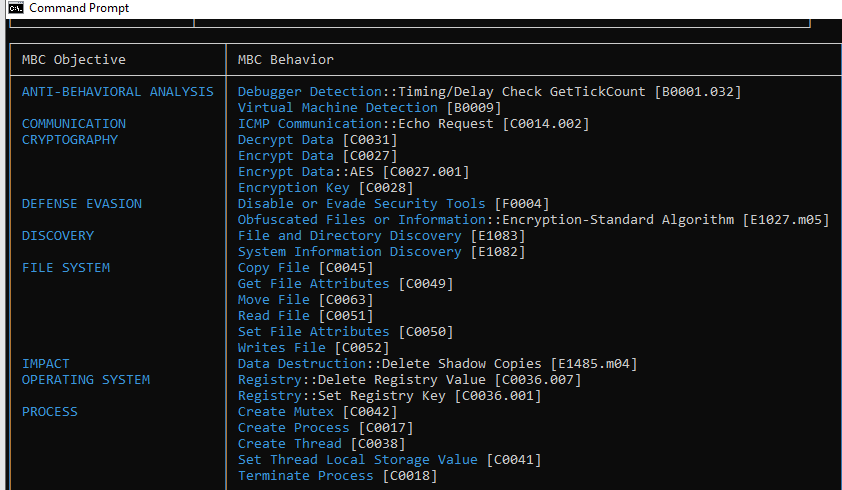
The MedusaLocker malware is equipped with various capabilities to carry out its attack. These include:
Anti-Analysis Techniques:
Debugger Detection: MedusaLocker uses
GetTickCountto check for time delays, which is a common anti-debugging method.Virtual Machine Detection: Strings targeting VMware are used to detect and evade analysis environments.
Communication:
ICMP Echo Request is used for communication, sending network traffic to external servers.
Cryptographic Actions:
MedusaLocker encrypts data using AES encryption, making it nearly impossible to recover without the decryption key.
File System and Process Interaction:
File Operations like copying, moving, reading, and writing files are among its core behaviors.
It terminates processes and creates mutexes, ensuring its persistence.
Impact and Persistence:
The ransomware attempts to delete volume shadow copies, which removes the possibility of data recovery from backups.
It can schedule tasks to ensure it remains on the system even after a reboot.
Raising Awareness: IOCs to Block
To proactively defend against MedusaLocker, organizations must focus on blocking the following IOCs (Indicators of Compromise):
Malware Hash: 05b51b5f41e483020d14126522a13c69b75e5cbb093a78980877bb60cf778873
Conclusion
MedusaLocker remains a significant threat to organizations, leveraging sophisticated evasion tactics, encryption methods, and system manipulation techniques. By using infrastructure mapping tools and analyzing its behavior, companies can gain a deeper understanding of the malware’s operation. This knowledge, combined with proactive monitoring and blocking of key IOCs, will allow organizations to better defend against MedusaLocker and other ransomware campaigns.
Stay Vigilant: If you’re looking for comprehensive cybersecurity solutions to protect your organization from ransomware, Alpha Cyber can help. With expert infrastructure mapping, threat analysis, and incident response strategies, we can ensure your systems remain secure against evolving threats. Reach out today for a consultation.